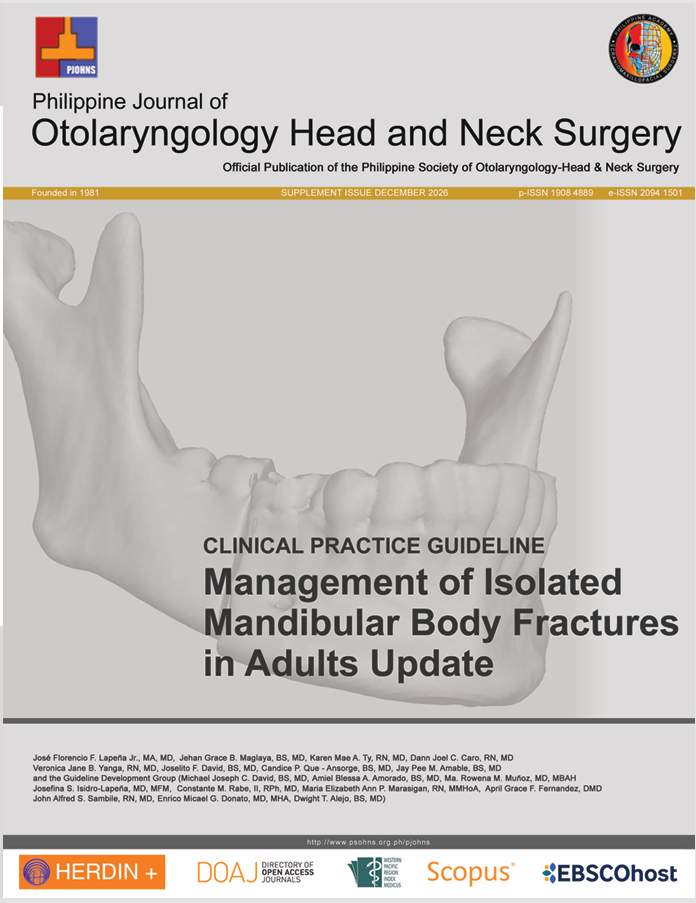
Management of Isolated Mandibular Body Fractures in Adults Update
Keywords:
Mandibular fractures, jaw fractures, maxillofacial fractures, classification, complications, history, diagnosis, diagnostic imaging, therapy, diet therapy, drug therapy, prevention and control, rehabilitation, surgeryAbstract
Objective:
The mandible is the most common fractured craniofacial bone of all craniofacial fractures in the Philippines, with the mandibular body as the most involved segment of all mandibular fractures. Prior to 2021, there were no existing guidelines for the diagnosis and management of mandibular body fractures in particular. General guidelines included the American Academy of Otolaryngology – Head and Neck Surgery Foundation (AAOHNSF) Resident Manual of Trauma to the Face, Head, and Neck chapter on Mandibular Trauma, the American Association of Oral and Maxillofacial Surgeons (AAOMS) Clinical Practice Guidelines for Oral and Maxillofacial Surgery
section on the Mandibular Angle, Body, and Ramus, and a 2013 Cochrane Systematic Review on interventions for the management of mandibular fractures. On the other hand, a very specific Clinical Practice Guideline on the Management of Unilateral Condylar Fracture of the Mandible was published by the Ministry of Health Malaysia in 2005. Addressing the prevalence of mandibular body fractures, and dearth of specific guidelines for its diagnosis and management, the Philippine Academy of Craniomaxillofacial Surgery (PACMFS) published a clinical practice guideline (CPG) on the Management of Isolated Mandibular Body Fractures in Adults in 2021. This CPG is part of the Compendium of Department of Health (DOH)-approved clinical practice guidelines of the Republic of the Philippines (available from: https://doh.gov.ph/dpcb/doh-approved-cpg/). This guideline update follows the scheduled review process five years from publication of the original CPG and focuses on the management of isolated mandibular body fractures in adults.
Scope and Purpose
This updated multidisciplinary guideline is meant for all clinicians (otolaryngologists – head and neck surgeons, craniomaxillofacial surgeons, as well as primary care and specialist physicians, nurses and nurse practitioners, midwives and community health workers, dentists, and emergency first-responders) providing care to adults aged 18 years and above who present with an acute history and physical and/or laboratory examination findings that may lead to a diagnosis of isolated mandibular body fracture and its subsequent medical and surgical management, including health promotion and disease prevention.
It is applicable in any setting (including urban and rural primary-care, community centers, treatment units, hospital emergency rooms, operating rooms) in which adults with isolated mandibular body fractures would be identified, diagnosed, or managed.
Outcomes are functional resolution of isolated mandibular body fractures; achieving premorbid form; avoiding use of context-inappropriate diagnostics and therapeutics; minimizing use of ineffective interventions; avoiding co-morbid infections, conditions, complications and adverse events; minimizing cost; maximizing health-related quality of life of individuals with isolated mandibular body fracture; increasing patient satisfaction; and preventing recurrence in patients and occurrence in others.
Downloads
Downloads
Published
How to Cite
License

This work is licensed under a Creative Commons Attribution-NonCommercial-NoDerivatives 4.0 International License.
Copyright transfer (all authors; where the work is not protected by a copyright act e.g. US federal employment at the time of manuscript preparation, and there is no copyright of which ownership can be transferred, a separate statement is hereby submitted by each concerned author). In consideration of the action taken by the Philippine Journal of Otolaryngology Head and Neck Surgery in reviewing and editing this manuscript, I hereby assign, transfer and convey all rights, title and interest in the work, including copyright ownership, to the Philippine Society of Otolaryngology Head and Neck Surgery, Inc. (PSOHNS) in the event that this work is published by the PSOHNS. In making this assignment of ownership, I understand that all accepted manuscripts become the permanent property of the PSOHNS and may not be published elsewhere without written permission from the PSOHNS unless shared under the terms of a Creative Commons Attribution-NonCommercial-NoDerivatives 4.0 International (CC BY-NC-ND 4.0) license.